

In November 1993, Dick Latvala, a longtime member of the Grateful Dead’s business organization, was featured on an episode of the Grateful Dead Hour, the popular syndicated radio show produced and hosted by David Gans. A dedicated fan and an incredibly knowledgeable tape collector, Latvala was hired in 1985 to assist Willy Legate, the group’s tape archivist, in organizing, cataloging, and maintaining the Dead’s extensive (and growing) archive of audio and video recordings. By the early 1990s, Latvala had succeeded Legate as the organization’s tape archivist. Speaking with Gans in the fall of 1993, Latvala described his long personal relationship with the band and detailed some of his duties and responsibilities as the archivist for the Grateful Dead. In particular, Latvala and Gans discussed the forthcoming release of the first volume in a new series of archival recordings called, appropriately enough, Dick’s Picks.
At the time, the Grateful Dead organization had begun to independently produce and distribute official releases from the group’s fabled “vault” of live recordings. Released in 1991, One From the Vault featured the complete recording of the Grateful Dead’s concert at the Great American Music Hall in San Francisco on August 13, 1975. The double-disc set was produced by Dan Healy, the band’s veteran live sound mixer, and was digitally remastered from the original multitrack tapes. In 1992, Healy and the Dead produced and released Two From the Vault, another two-disc set featuring remastered multitrack recordings of live performances from August 1968 at the Shrine Auditorium in Los Angeles. Both releases were advertised in independent record stores, Dead-related fanzines, and were promoted direct to fans via the Dead Head mailing list, a list maintained by the organization that included the names and addresses of nearly one hundred thousand fans.
By the end of 1992, Healy had seemingly lost interest in the project and—despite being incredibly popular among Dead Heads—the Dead organization decided to take a break from producing new volumes in the From the Vault series. As Latvala explained to Gans, the idea of establishing a complementary archival series devoted to the group’s two-track stereo recordings was first suggested by Kidd Candelario, a member of the Dead’s road crew and who was also active within the merchandising division of the Grateful Dead organization. “It was Kidd’s idea,” Latvala told Gans, “and I put together some shows, and then there was a long period of waiting. You can’t be too impatient.”1 Latvala recalled feeling “extreme pressure” when selecting recordings and that he “did a lot of work listening and making sure [the recordings] were okay before I made the tapes to give to Kidd to give to the band to listen to.”
At the time, Latvala maintained multiple notebooks that cataloged the numerous reel-to-reel tapes preserved within the Grateful Dead’s vault. Two notebooks contained information detailing the group’s two-track recordings, including the date and location of the performance, the format of the master tape, number of reels, and song setlists. Of these two notebooks, one detailed recordings from 1969 through part of 1978; the other notebook resumed in 1978 and continued through April 1981. Three additional notebooks contained information on the band’s multitrack recordings. Two of these notebooks cataloged the contents of the multitrack tapes stored on 10 ½ inch reels (one notebook included entries from 1967 to 1973 and the other from 1973 until 1985) while a single notebook identified multitrack recordings produced between 1969 and 1976 that were stored on 14 ½ reels.
As he began to review select two-track tapes for the new series, Latvala often included annotations in his notebooks describing aspects of the musical performances and the quality of the recordings. Although some of his notes are undated, many of Latvala’s annotations include dates making it possible to identify many of the taped recordings that he reviewed over several months. At the same time, many of Latvala’s annotations provide a bit of insight into some of the general aesthetic criteria and basic technical expectations that he and other members of the Dead organization were committed to while planning and producing Dick’s Picks, Volume One.
Latvala’s earliest notes date from September 1992.2 Between September 13 and September 19, he reviewed archival recordings of at least six concerts from the spring and fall of 1973. As seen in Table 1, Latvala noted that there was “not much bass” on the recording of the band’s concert at the Boston Garden on April 2, 1973. Regarding the musical performances, he remarked that the “1st set has high energy, although no killers!” Latvala wrote that the “2nd set is still full of energy,” including a “Brain-fry jazzy Jam section” that emerges from “Here Comes Sunshine.” Ultimately, however, Latvala wrote that “only ‘Eyes [of the World]’ is exceptional!”
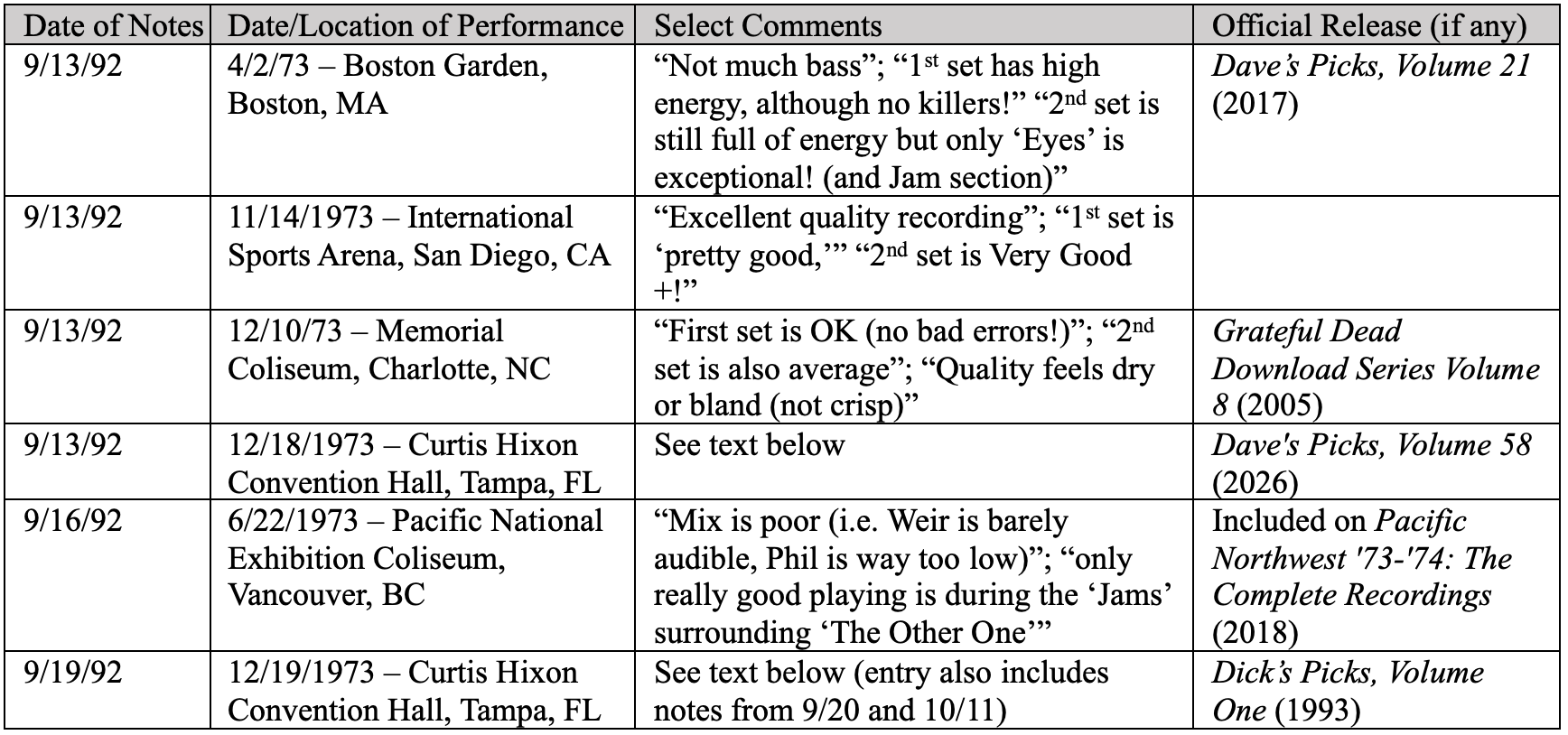
Table 1: Select recordings considered by Latvala in September 1992
Among the other performances he considered in September, Latvala also reviewed recordings of two concerts at the Curtis Hixon Convention Hall in Tampa, Florida on December 18 and 19, 1973. In his notes, Latvala observed that “we definitely have some bass!” in the recording of the concert from December 18. However, he continued, the recording “quality is not sharp & clean (sounds a bit muddy/boomy).” As for the performances, he wrote that the “1st set is pretty good. (I give it a G+ rating.)” “The 2nd set, on the other hand, is much better quality.” “In fact,” Latvala continued, “it seems excellent and the performance has equally improved dramatically!” In particular, he highlighted the group’s lengthy performance of “Dark Star” and “Eyes of the World” (“This is really good”).
On September 19, Latvala reviewed the band’s second concert at Curtis Hixon Convention Hall from December 19, 1973. As seen at the top of the image reproduced in Figure 1, Latvala wrote that the “bass is a bit low” (in a note in red ink he added “as are the vocals and Weir’s guitar”). Despite some issues concerning the mix, he notes that the overall “quality is [the] same as last night (i.e. EXC[ellent]!).” Throughout his notebooks, Latvala often identified noteworthy performances with an asterisk typically written in red ink. As seen in Figure 1, he singled out many notable performances from the Dead’s concert on December 19, including an extended “Jam” (“melt-down”) that featured an “exc. ‘Spanish Theme.’” The next day, Latvala returned to the entry for December 19, 1973 in his notebook, writing that the performance of “Here Comes Sunshine” was the “most thrilling version so far.” Check it out for yourself:
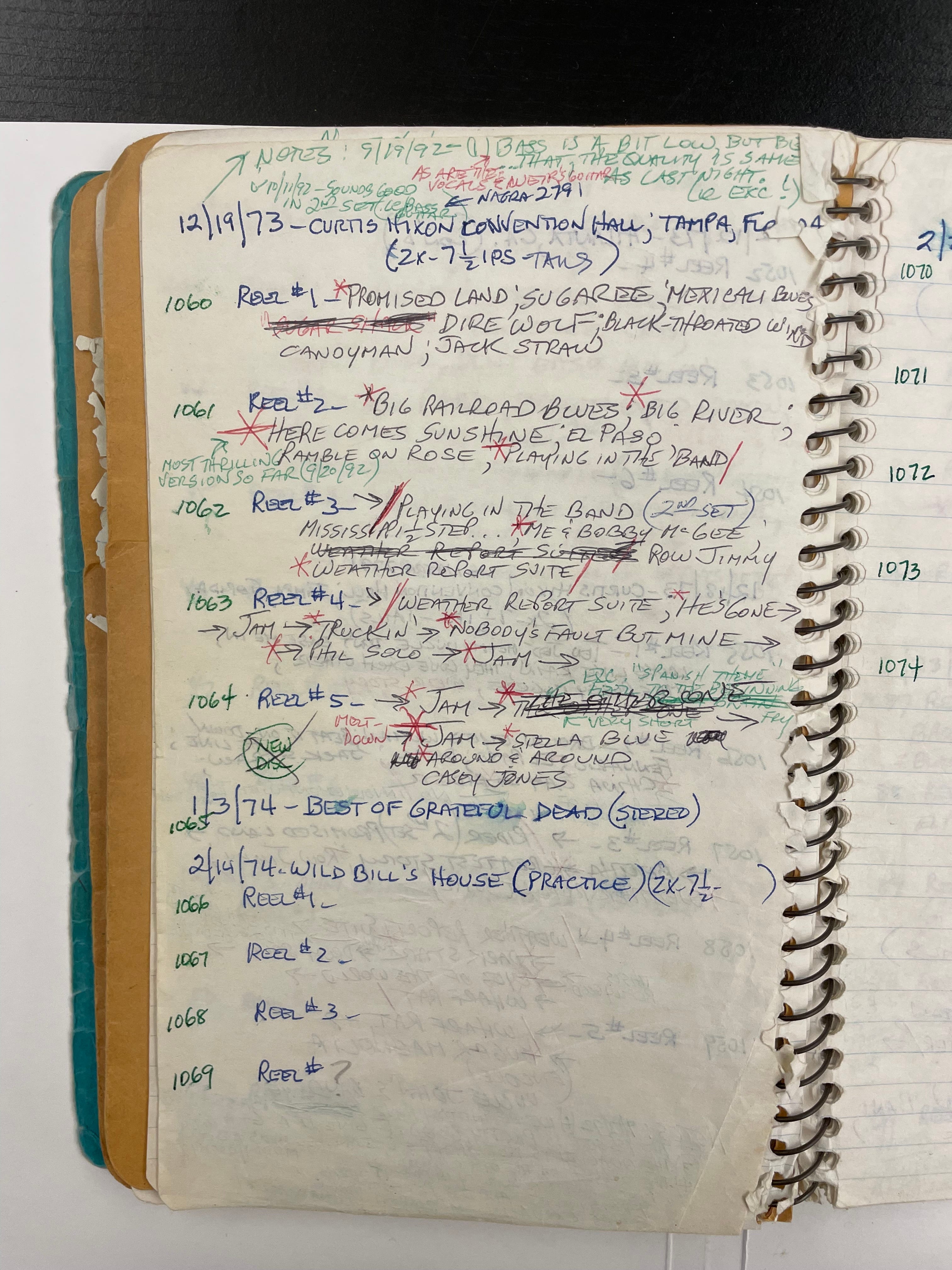
Figure 1: Latvala’s notebook entry and dated annotations for concert on December 19, 1973 at Curtis Hixon Convention Hall, Tampa, FL
Latvala continued to review recordings in October. Whereas he often included full dates while compiling his notes in September, most of Latvala’s notebook annotations from October are identified using a month/year format (i.e., “10/92”). As seen in Table 2, however, he did provide full dates on at least two occasions. On October 6, Latvala reviewed recordings of a concert at the Golden Hall on the Community Concourse in San Diego, California from January 10, 1970. Noting that the recording “quality is poor,” he emphasized how “tape quality should be [the] barometer of the best stuff” when selecting performances for the series. A few days later, Latvala returned to the concert from December 19, 1973 in Tampa. In an entry dated October 11, he wrote that everything “Sounds good in 2nd set.”
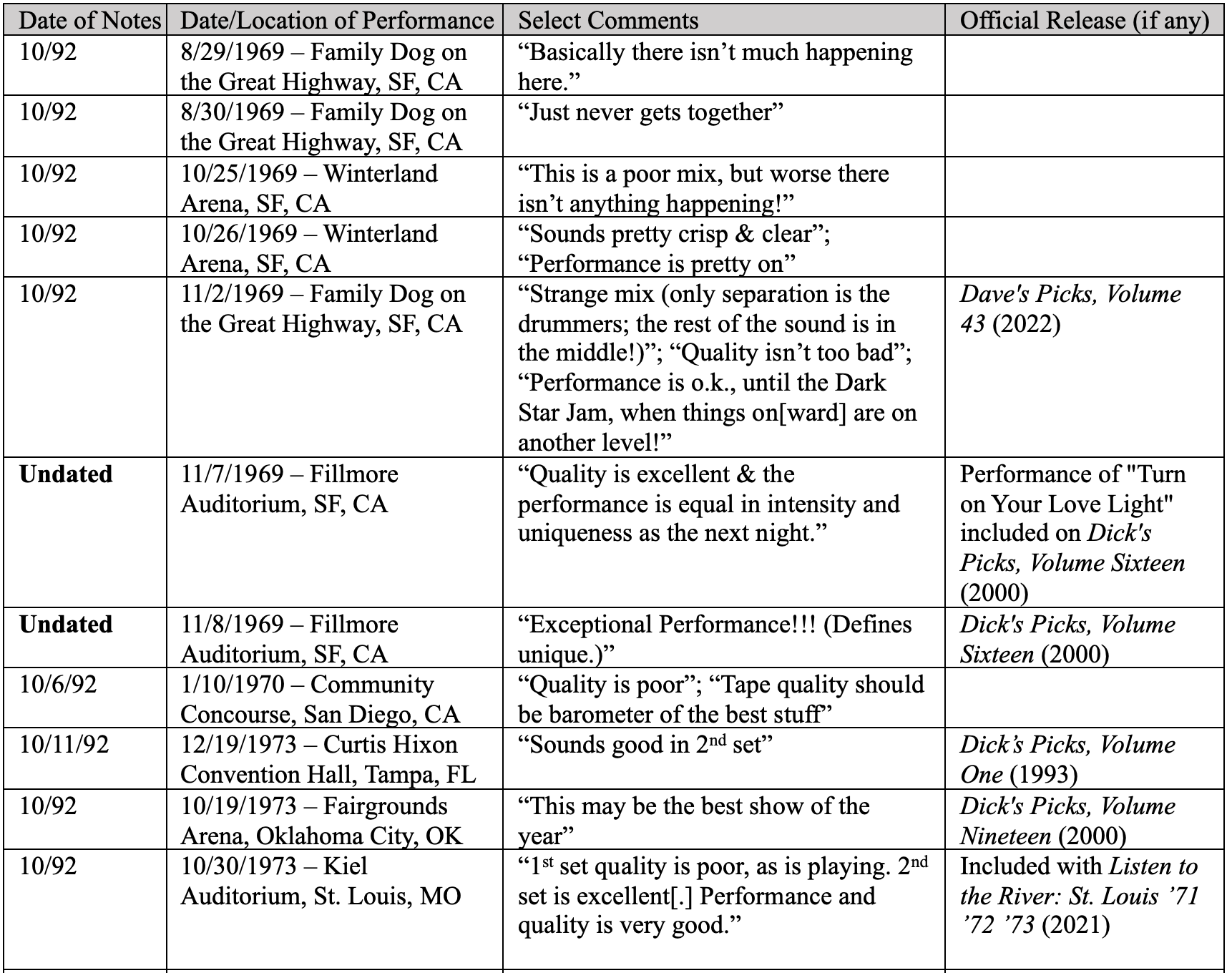
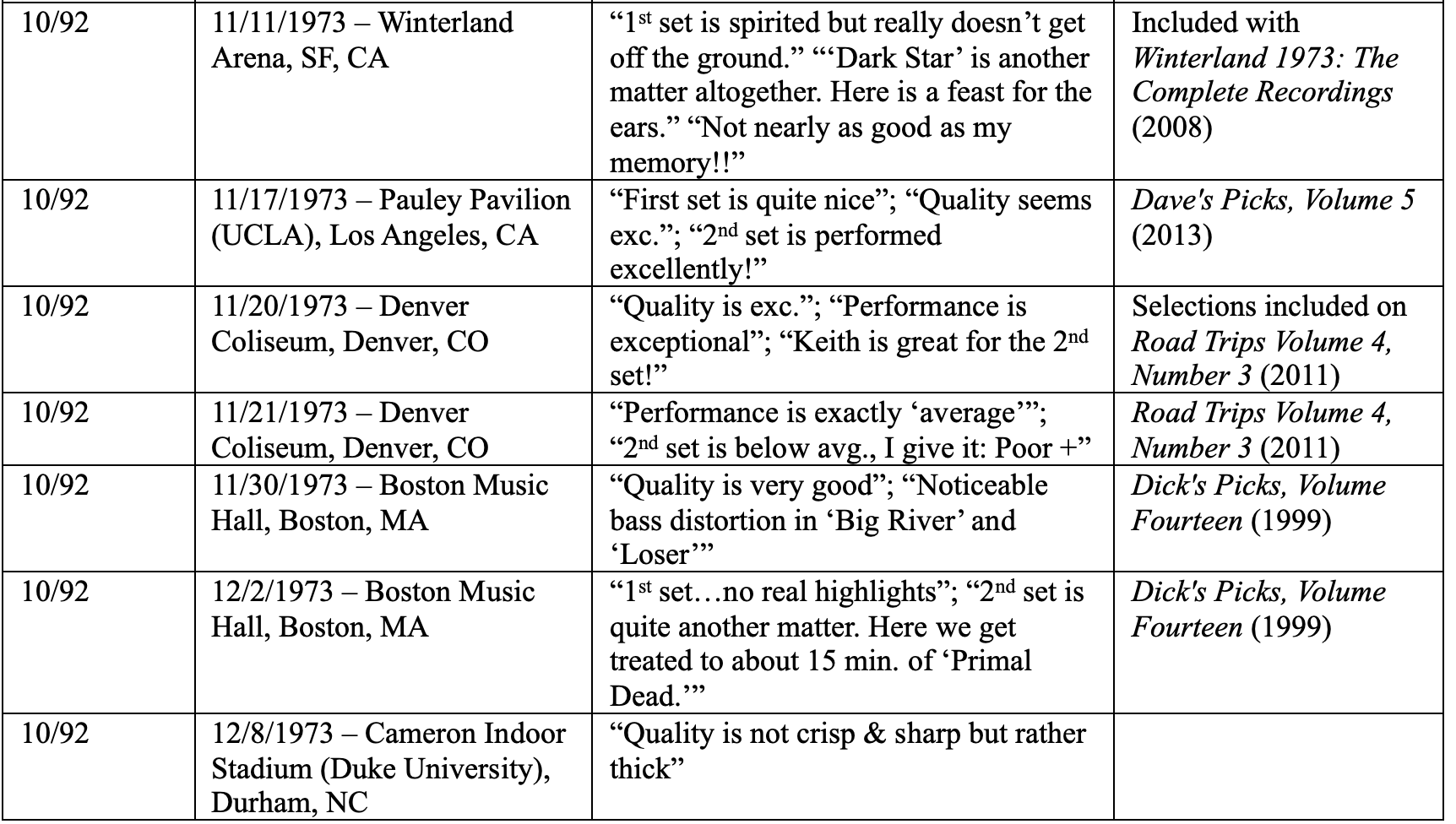
Table 2: Select recordings considered by Latvala in October 1992
With the exception of the show from January 1970 in San Diego, all of the recorded performances that Latvala reviewed in October appear to be of concerts dating from the fall of 1969 and the fall of 1973. Regarding shows recorded at the Family Dog on the Great Highway in August 1969, Latvala remarked that “Basically there isn’t much happening here” and that the performance from August 30 “Just never gets together.” In his notes to the group’s show at the Family Dog on November 2, 1969, however, Latvala wrote that the “Performance is o.k., until the Dark Star Jam” when, in his opinion, the performance rises to “another level!” During this time, Latvala also appears to have reviewed two concerts recorded at the Fillmore Auditorium in November 1969. In his undated notes on the recording from November 7, he wrote that the “Quality is excellent & the performance is equal in intensity and uniqueness as the next night.” As for the next night, Latvala wrote: “Exceptional Performance!!! (Defines unique.)”
Among the recordings he reviewed from the fall of 1973, Latvala suggested that the Grateful Dead’s concert at the Fairgrounds Arena in Oklahoma City on October 19, 1973, “may be the best show of the year.” Regarding two shows in Denver, Colorado in November, Latvala wrote that—for the first night—the recording “Quality is exc.” and the “Performance is exceptional.” Referring to the band’s keyboard player, Latvala enthused that “Keith [Godchaux] is great for the 2nd set!” As for the following night, however, he wrote that the “Performance is exactly ‘average’” and that the “2nd set is below avg., I give it a Poor +.”
Describing the performance of “Here Comes Sunshine” at the Boston Garden on November 30, Latvala wrote that “this version is equal to 12/19/73!!! (and uniquely different!).” Finally, in his notes for the performance at Cameron Indoor Stadium at Duke University on December 8, 1973 (reproduced in Figure 2), Latvala remarked that the tape “quality is not crisp & sharp but rather thick.” Although the recording did include some “interesting talk from Phil & Weir” and the “best version yet!” of the “Mexican Hat Dance,” Latvala wrote that “each song is done better than average” and that there was nothing “exceptional at all” about the first set.
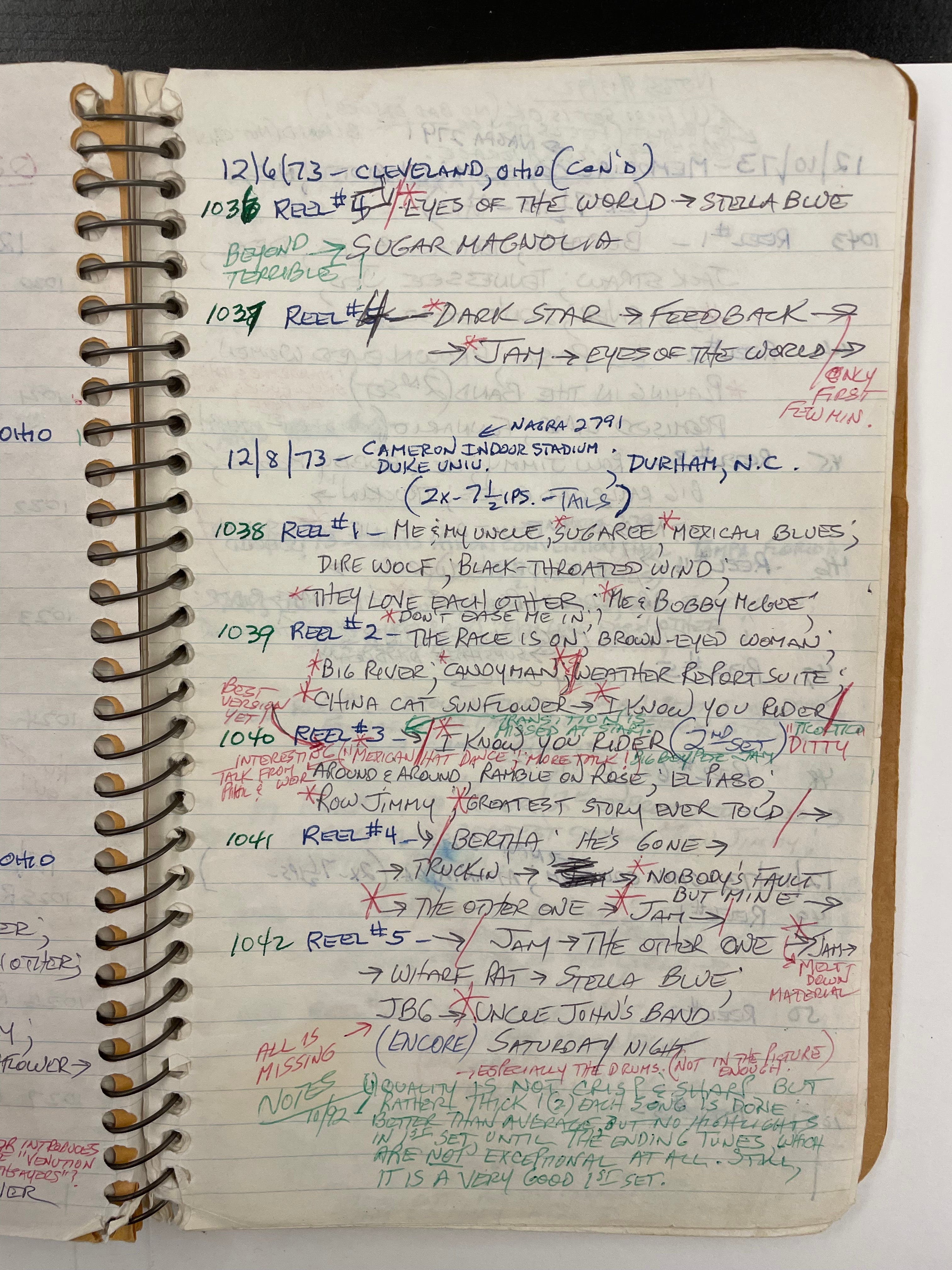
Figure 2: Latvala’s notebook entry and dated annotations for concert on December 8, 1973 at Cameron Indoor Stadium, Duke University, Durham, NC
There are considerably fewer dated annotations among Latvala’s notebooks over the next several months as plans for the new archival series continued. In November, he reviewed a concert at Kezar Stadium in San Francisco from May 26, 1973 (“Quality seems brittle, with the vocals especially thin”). In February and March of 1993, Latvala reviewed three concerts originally recorded at the Family Dog from February 27 (“this show is actually not that interesting”) and March 1, 1970 (“really sloppy & contains only a few good moments”). Table 3 details some of the other recordings he considered throughout the summer of 1993.
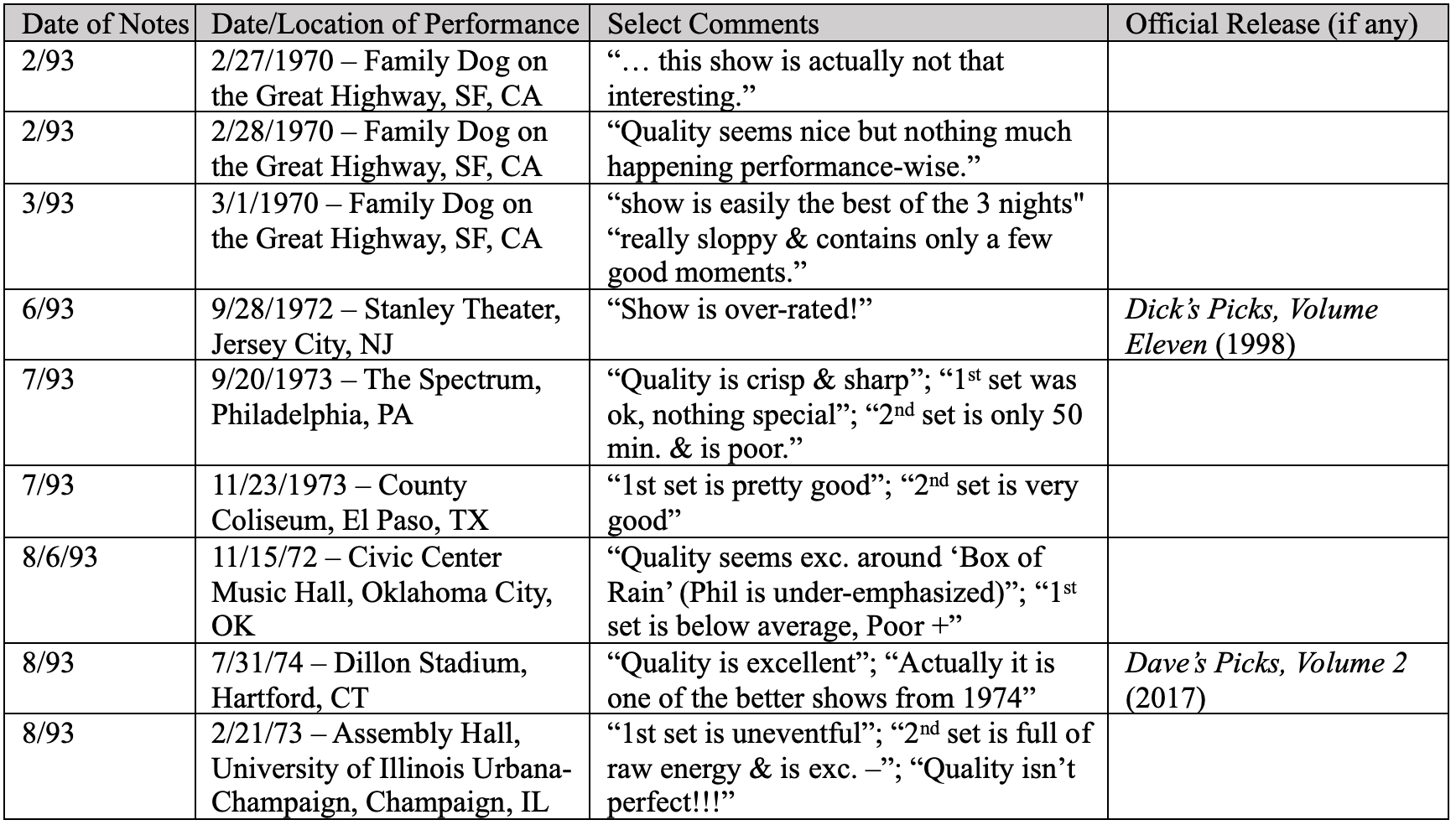
Table 3: Select recordings considered by Latvala from February to August, 1993
In the interview broadcast on the Grateful Dead Hour in November 1993, Latvala told David Gans that, when it came time to narrow down his selections, the three shows “I chose were 12/19/73 and 2/13/70 and 10/11/77 Norman, Oklahoma.” As his notebooks confirm, he had been especially attracted to the band’s performance from Curtis Hixon Convention Hall in December 1973. Interestingly, Latvala did not annotate either of the notebook entries for the other performances he mentioned: the group’s concert at the Lloyd Noble Center on the campus of the University of Oklahoma on October 11, 1977 nor the concert at the Fillmore East in New York City from Valentine’s Day weekend in 1970.
By the fall of 1993, Latvala and other members of the Grateful Dead organization (including producer John Cutler and bassist Phil Lesh) had decided to release select performances from the Grateful Dead’s concert on December 19, 1973 as the first volume in the new series. “We settled on 12/19/73,” Latvala told Gans, “because it was right in the middle of the other two releases and it was a real creative era. The late ’73 period for me, I’m discovering more and more, had some just magnificent shows.”
Speaking shortly before the Dead organization prepared to release the two-disc set in December, Latvala explained to Gans that, “This is really an experiment, this first one, to see how it does, because no one has a clue as to how much interest there is out there to get at this material. This is only mail order, you see. It’s not going to be in stores. So this will be like a little private club, so to speak, you know, that is willing to go that extra mile for the really good stuff.”
As suggested by the many dated annotations in his notebooks from October 1993, it would appear that Latvala was already reviewing recordings for the next volume of Dick’s Picks around the time of his interview with Gans. At the end of the interview, Gans thanked him and said, “I hope you’ll come back when Dick’s Picks number two comes out and talk about it some more!” “I’d love to,” Latvala responded.
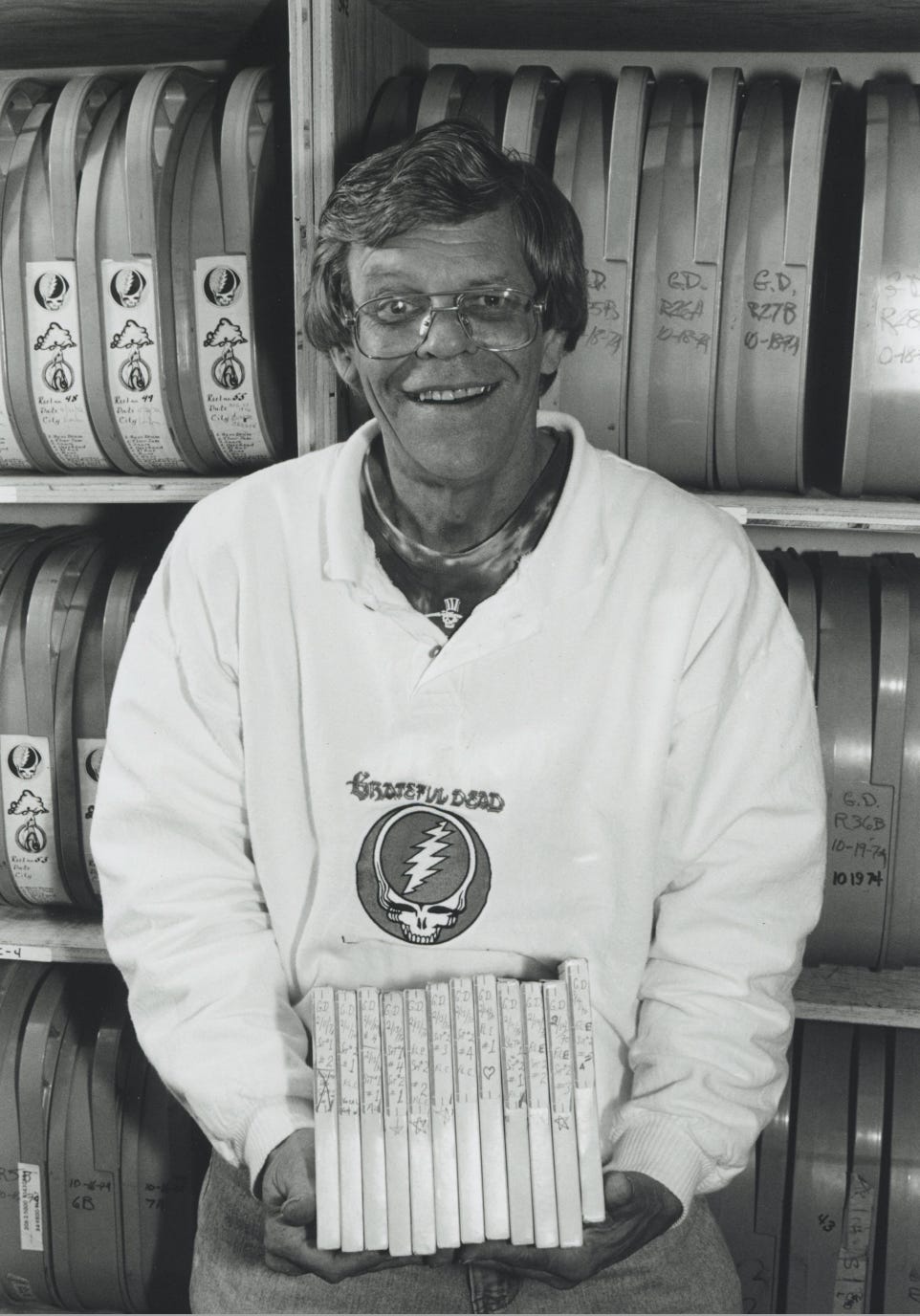
Dick Latvala (c. 1994). Photo by Susana Millman
All quotes from David Gans’s interview with Dick Latvala conducted on October 5, 1993, are drawn from a transcript at https://www.gdhour.com/transcripts/latvala.931005.html. My sincere thanks to David Gans for providing an audio file of the original broadcast.
As part of his interview that was broadcast on the Grateful Dead Hour, Latvala claimed that work on the Dick’s Picks series began in early 1993. Based upon many of the dates included in the notebooks, it appears that work on the series actually began in the early fall of 1992, shortly after Jerry Garcia had suffered another serious health scare in August.
Unless otherwise indicated, all information, quotations, and images relating to Latvala’s notebooks are drawn from materials included among the Dick Latvala papers, MS 333. Special Collections and Archives, University Library, University of California, Santa Cruz.